Iron-rich rocks in Western Australia could yield natural hydrogen
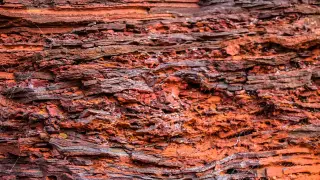
Researchers at Edith Cowan University found that magnetite in Western Australia's iron ore deposits can generate hydrogen when heated with water under high pressure. They also discovered that injecting a solution into these formations can boost hydrogen production. If scaled up, the Pilbara region could become a major source of low-emission energy.
The ECU team's experiments simulated deep subsurface conditions by heating magnetite samples to 200°C under high pressure for two months. Their results indicated that rock structure—particularly fractures and permeable pathways that allow water to reach fresh mineral surfaces—matters as much as magnetite quantity in determining hydrogen yield. The researchers also demonstrated that injecting a solution into banded iron formations could stimulate greater hydrogen output, suggesting a pathway toward deliberate underground enhancement.
Western Australia's Pilbara region contains some of the planet's largest banded iron formations, making it a uniquely promising site for natural hydrogen extraction. The research bridges laboratory findings with real geological systems, offering insight into how hydrogen production might unfold naturally beneath the surface and how it could potentially be managed for energy purposes.
If scaled successfully, this discovery could provide Australia with a domestic low-emission energy source and potentially establish a hydrogen export industry. Communities in resource-dependent regions like the Pilbara may see economic shifts as iron ore extraction could be complemented by energy production. However, commercial viability remains uncertain, and the timeline for development could span years or decades. Energy consumers worldwide might eventually benefit from an additional clean fuel option, though infrastructure and investment requirements would be substantial.