Gondwana's Landmass Was Larger Than Previously Thought, Study Finds
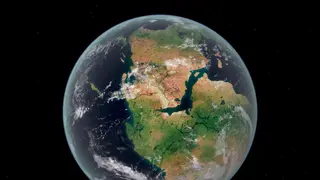
An analysis of over 25,000 volcanic rock samples indicates that the ancient supercontinent Gondwana covered roughly 80% of Earth's land area about 500 million years ago, far exceeding earlier estimates of 64%. The study also identified crustal fragments beneath Asia, Europe, and North America as remnants of Gondwana. This expanded footprint may have played a key role in the Cambrian explosion of life.
The research team mapped the supercontinent by examining chemical signatures and elemental distributions within over 25,000 deeply buried rock samples sourced from geochemistry databases. This approach uncovered crustal fragments beneath modern Asia, Europe, and North America that were previously unrecognized as Gondwanan remnants.
Beyond its sheer scale, the expanded landmass may have driven major shifts in sea levels, atmospheric gases, and volcanic activity, potentially triggering the Cambrian explosion. The authors caution that some remnants may have been submerged or recycled into the planet's interior, suggesting the 80% figure could still be an underestimate.
This revised footprint could reshape geological models, potentially refining how scientists interpret ancient climate dynamics and plate tectonic processes. Educators and textbook publishers may need to update foundational curricula, while researchers studying early animal evolution might gain new avenues for investigating environmental triggers of the Cambrian explosion. The findings could also influence modern resource exploration, as understanding ancient continental fragments may help locate mineral deposits hidden beneath younger terrains.