Fossils reveal Tasmanian devils coexisted with humans in Western Australia's Pilbara for millennia
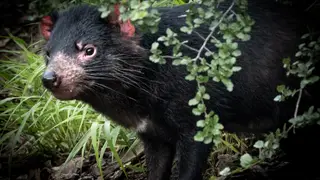
New fossil evidence from the Juukan 2 rockshelter in the Pilbara region shows Tasmanian devils lived alongside humans as far back as 45,000 years ago. Researchers identified a jaw fragment dated to roughly 7,000 years ago and a tooth dated to between 42,500 and 47,100 years old. Analysis of thousands of bones suggests devils scavenged near human camps before their mainland extinction.
The Juukan 2 rockshelter holds particular scientific weight as the only northern Australian Pleistocene site where animal remains appear in clear association with stone tools, preserving an unusually complete record of human-animal interaction. Its significance grew after mining operations extensively damaged the site in 2020, with ongoing research and rehabilitation now directed by Traditional Owners from the Puutu Kunti Kurrama and Pinikura peoples.
Beyond the two diagnostic fossils, researchers cataloged more than 8,000 animal bones, finding over 1,000 with gnawing marks. Analysis of 55 specimens identified at least 10 with tooth-pit dimensions matching devil bite patterns, while 263 digested bone fragments suggest scavenging activity. These devil-like marks span pre-glacial, post-glacial, and Holocene deposits, indicating repeated scavenging near human campsites across tens of thousands of years.
This discovery may reshape understanding of mainland Australia's ecological history, showing Tasmanian devils persisted in the Pilbara far longer than previously documented. For Indigenous communities, particularly the Puutu Kunti Kurrama and Pinikura peoples, the findings could strengthen cultural heritage claims and underscore the archaeological value of sites damaged by industrial activity. The research may also inform modern conservation debates about species reintroduction, though such discussions remain speculative.