Ancient ritual use of Australian cave traced back 25,000 years via plant remains
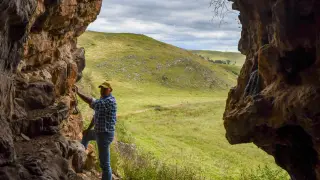
Microscopic plant remains from Cloggs Cave in Australia show that GunaiKurnai ancestors deliberately gathered whole grasses, carried them into the dark cave, and burned them in thin layers over thousands of years. The practice may span 25,000 years, with a standing stone and other objects indicating a long-lived spiritual site. The findings are published in Frontiers in Environmental Archaeology.
The phytolith analysis drew on sediment from two excavation pits reaching depths of 1.5 and 2.3 meters. Researchers identified 73 distinct ash layers deposited between roughly 4,400 and 1,600 years ago, with dating confirmed through optically stimulated luminescence and accelerator mass spectrometry. A 28-centimeter standing stone, deliberately positioned by the Old Ancestors, was also recovered from the cave deposits.
The study emerged from excavations conducted in 2019 and 2020, initiated at the request of the GunaiKurnai Land and Waters Corporation. GunaiKurnai representatives participated in research design, fieldwork, and interpretation. Because no vegetation grows naturally inside the dark cave, the half-burnt phytoliths in ashy layers could only have arrived through deliberate human action, ruling out animal transport as an explanation.
This finding could reshape public understanding of Indigenous cultural continuity in Australia, demonstrating that ritual practices persisted at a single site across roughly 25,000 years. It may strengthen collaborative research models between archaeologists and Traditional Custodian communities, potentially influencing how heritage sites are managed and interpreted. The evidence may also inform broader conversations about the deep antiquity of Aboriginal spiritual traditions, though its wider societal impact will depend on how the findings are integrated into education and policy.