UK climate advisers say Heathrow growth would deepen aviation's emissions overshoot
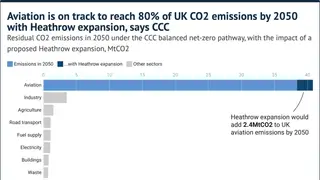
The Climate Change Committee has advised the UK government that aviation emissions are set to rise to 38 million tonnes of CO2 by 2050 even without Heathrow expansion, representing most of the country's remaining emissions under net-zero targets. Adding a third runway would increase that figure by a further 2.4 million tonnes, or about 5% of all UK emissions in 2050. The committee stated that current policies, including reliance on sustainable aviation fuels, are not credible enough to reverse the trend.
Aviation emissions have doubled since 1990 while other UK sectors have cut their climate impact. The previous government's jet-zero strategy leaned heavily on unproven technologies, which the current administration has admitted were unrealistic. The CCC insists a credible policy framework must be in place by 2027, well before the Heathrow decision expected in 2029.
To fund decarbonisation, the committee proposes a "polluter pays" model, forcing airlines to finance sustainable fuels and engineered carbon removal like direct air capture. This could raise ticket prices by roughly £150 for a short European return and £400 for a transatlantic trip by 2050, avoiding a public subsidy that would burden the half of the population that never flies.
This advice could reshape the Heathrow debate, forcing policymakers to weigh economic growth against legally binding climate targets. If adopted, higher ticket prices may disproportionately affect lower-income travellers, while the 50% who do not fly could avoid direct costs. The 2029 decision will likely become a litmus test for the UK's net-zero credibility, potentially influencing investment in green aviation technology and public trust in climate governance.