Global Warming Set the Stage for Nepal's Catastrophic Glacier Collapse, Study Finds
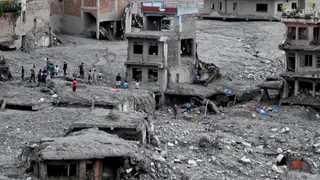
A new attribution study concludes that decades of rising temperatures were a decisive factor in the August collapse of a glacier on Langtang Lirung Mountain in Nepal, which killed at least 1,300 people. Record heat and unusually heavy snowfall preceded the event, while thawing permafrost and melting ice weakened the mountain slope. The initial breakaway of rock and ice, estimated at 116 million cubic meters, is unprecedented in the Himalayas.
The August collapse released roughly 116 million cubic meters of rock and ice, a volume five times greater than the 2021 Chamoli disaster in India. Scientists noted that record heat in preceding months, combined with unusually heavy snowfall in late 2025, added meltwater that likely contributed to the destabilization of the mountain face.
The disaster has strained international climate loss-and-damage mechanisms. Nepal sought help from a UN-backed fund holding only about $800 million in pledges, with roughly $350 million available for claims—far short of the estimated $5 billion in damages. Approximately 5,000 people remain missing.
This event could reshape how vulnerable mountain nations approach disaster preparedness and international compensation claims. Communities across the Himalayas may face heightened risk awareness and pressure to relocate, while governments could reassess infrastructure investments in high-altitude zones. The scale of losses may also test the credibility of global climate finance mechanisms, potentially influencing future negotiations on loss-and-damage funding and how quickly wealthier nations respond to such catastrophes.