Germanic Settlement Workshops Show Recycling of Roman Metal Beyond Empire's Borders
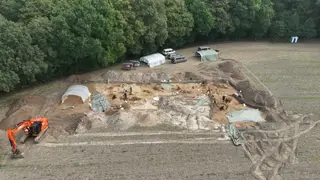
Archaeologists uncovered a rare workshop area at a Germanic settlement near Dortmund, Germany, dating from the 1st to 5th centuries CE. The excavation by LWL and Dortmund City Archaeology has been ongoing since mid-August and is nearly complete. The findings reveal how Roman metal was recycled in regions outside the Roman Empire.
The excavation, a joint effort by regional heritage authorities and city archaeologists, has been underway since mid-August and is now nearing completion. The workshop area represents a rare find for this type of settlement, offering a focused look at daily industrial activity rather than just domestic life. The site's occupation spans several centuries, from the 1st through the 5th century CE, a period of significant contact and conflict between Germanic tribes and the Roman world.
The discovery of recycled Roman metal at a site well beyond the imperial frontier highlights the complex economic relationships that existed outside Rome's formal borders. Rather than being isolated, Germanic communities clearly had access to Roman materials, likely through trade, tribute, or the aftermath of military encounters. This recycling activity suggests a practical, resourceful adaptation of foreign goods into local craft traditions, providing tangible evidence of how materials moved across cultural and political boundaries in antiquity.
This discovery could reshape public understanding of ancient Germanic societies, which are often portrayed as primitive compared to Rome. The evidence of organized metalworking and material reuse may influence how museums and educators present cross-border interactions in antiquity. For local communities in the Ruhr region, the find could strengthen cultural heritage tourism and regional identity. Scholars may use these findings to refine models of economic exchange beyond imperial frontiers, potentially affecting how similar sites elsewhere are interpreted.