Interstellar comet 3I/ATLAS hints at widespread molecular building blocks for life
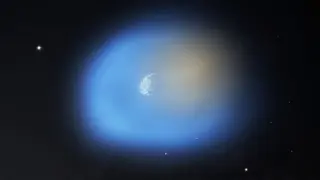
Astronomers studying the interstellar comet 3I/ATLAS have found no evidence of alien technology, but its composition reveals abundant precursors to biomolecules like methanol and hydrogen cyanide. The object, likely a preserved fragment from another planetary system, may help scientists estimate how common life's ingredients are across the galaxy. Researchers continue to analyze data from telescopes and spacecraft to learn more about the comet's origins and implications for life beyond Earth.
3I/ATLAS, discovered in July 2025, is only the third interstellar object ever observed. Its roughly four-month passage through the inner solar system allowed extensive data collection by telescopes and spacecraft. Scientists believe it is a preserved fragment of a planetesimal from another planetary system, making its composition a rare window into the chemical inventory of a distant world's formation.
The comet's coma showed abundant methanol and hydrogen cyanide—simple organic molecules that are precursors to proteins and nucleic acids. This mirrors findings from the Bennu asteroid samples, which contained nucleotide bases and 14 amino acids. The comet's chemistry suggests that such life-building compounds are not rare, but likely widespread across the Milky Way.
This finding could shift public and scientific expectations about life beyond Earth, moving the conversation from speculative alien technology toward measurable chemistry. It may influence future telescope time allocations and mission priorities, as researchers seek more interstellar samples. Society could benefit from a more grounded understanding that life's raw ingredients are common, potentially increasing support for astrobiology research while tempering sensational claims about intelligent visitors.