European Rocket Delivers Ocean and Plant-Monitoring Satellites to Orbit
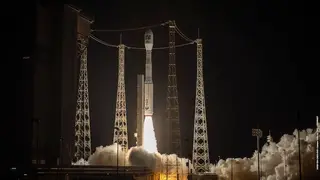
Avio's Vega-C rocket lifted off from French Guiana on September 15, carrying the Copernicus Sentinel-3C and FLEX satellites. Sentinel-3C will monitor oceans and atmosphere, while FLEX will study plant fluorescence. Both spacecraft were deployed successfully and are now in orbit, according to ESA.
The VV30 flight marked the eighth Vega-C launch and the second managed solely by Avio, following a handover from Arianespace. The 34.8-meter rocket deployed its primary passenger, Sentinel-3C, just over an hour after liftoff, with the FLEX satellite following nearly an hour later. Both spacecraft confirmed healthy via signal acquisition.
Sentinel-3C continues a series that began with 3A in 2016 and 3B in 2018, both launched on Russian Rokot vehicles. Those earlier satellites have exceeded their 7.5-year design lives. The new spacecraft carries instruments for sea-surface topography, temperature, and ocean/land color, plus wildfire detection. FLEX, meanwhile, focuses on measuring plant fluorescence to assess vegetation health.
The successful deployment could strengthen Europe's climate monitoring capabilities, providing continuous data on ocean health, atmospheric conditions, and vegetation stress. This may improve weather forecasting, wildfire detection, and agricultural planning, benefiting farmers, coastal communities, and disaster response agencies. The long-term continuity of the Sentinel-3 series ensures a stable climate record, which could inform future environmental policies and public awareness of ecological changes.