Upcoming Vega-C Mission to Carry Climate and Plant-Health Observers
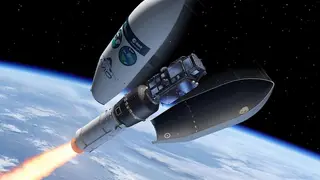
Avio's Vega-C rocket is scheduled to launch from French Guiana on September 14, carrying two Earth-observation satellites. The mission, designated VV30, will deploy Sentinel-3C for ocean and atmosphere monitoring and FLEX for plant health studies. The rocket is expected to place both spacecraft into a sun-synchronous orbit at 820 kilometers altitude.
The VV30 flight marks a shift in European launch operations, as Avio assumes full management responsibility for Vega-C missions that were previously handled jointly with Arianespace. The rocket's AVUM+ upper stage, powered by a Ukrainian-built RD-843 engine, can execute up to seven separate burns, enabling precise placement of multiple payloads during a single flight.
The two satellites are stacked inside the fairing using a Vespa adapter, with Sentinel-3C positioned above FLEX to allow sequential release. Sentinel-3C continues a series tracking ocean color, sea-level rise, and wildfire activity, while FLEX will study plant fluorescence, a direct indicator of photosynthetic health. Both spacecraft will operate in a sun-synchronous orbit, ensuring consistent lighting conditions for their observations.
This dual-satellite mission could strengthen global climate monitoring by providing continuous data on ocean warming and vegetation stress. Agricultural stakeholders may benefit from FLEX's plant-health observations, potentially informing crop management and food security planning. Meanwhile, Avio's expanded operational role could signal growing European autonomy in space access, with implications for commercial launch competitiveness. However, the mission's success depends on the reliable performance of the Ukrainian-supplied upper-stage engine, a factor that may carry geopolitical weight given ongoing regional tensions.