Top Solar Makers Face Margin Squeeze as Overseas Shipments Gain Share
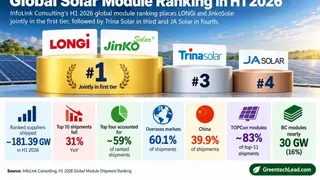
InfoLink Consulting’s H1 2026 ranking places LONGi and JinkoSolar in a tie for first with shipments of 29.93 GW and 29.6 GW respectively, followed by Trina Solar and JA Solar. Shipments from the top 10 suppliers dropped 31% year over year, reflecting weak Chinese demand and oversupply, while overseas markets accounted for 60.1% of shipments—up about 18 percentage points from a year earlier. The four leaders now control roughly 59% of ranked shipments, but their strategies diverge around TOPCon, back-contact technology, and storage integration.
The shipment tie masks sharply divergent strategies. JinkoSolar's cumulative installations surpassed 420 GW, with its Tiger Neo line alone exceeding 250 GW, while LONGi shipped 19.55 GW of back-contact modules—a 125 percent annual surge—making up over 65 percent of its total. LONGi also moved 48.91 GW of wafers, including nearly 19 GW sold externally.
Geographic diversification has become decisive. Overseas markets absorbed 60.1 percent of top suppliers' shipments, up roughly 18 points from a year earlier, while China's share fell to 39.9 percent. JinkoSolar directed about 70 percent of its modules abroad, and LONGi earned over 65 percent of module revenue overseas, underscoring how international relationships now shape competitive standing.
The margin squeeze facing top solar manufacturers could reshape the global energy transition. Persistent oversupply may keep module prices low, benefiting utilities, developers, and households in emerging markets that gain cheaper access to solar capacity. However, sustained thin margins could slow investment in next-generation technologies like back-contact cells, potentially delaying efficiency gains that reduce land requirements for large projects. Buyers face a trade-off between near-term cost savings and long-term innovation, with the industry's financial health influencing how quickly solar displaces fossil fuels worldwide.