Neptune reaches opposition, best viewed with optics
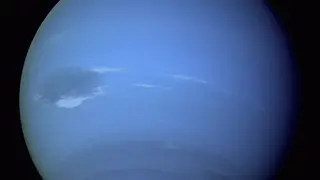
Neptune will be opposite the sun in Earth's sky on September 26, 2026, placing it at its closest and brightest for the year. It rises in the east at sunset and remains visible all night, but requires binoculars or a telescope because it lies about 30 times farther from the sun than Earth. After opposition, Neptune stays in the evening sky through February 2027.
Neptune’s 2026 opposition occurs at 2 UTC on September 26, when Earth passes between the sun and the eighth planet. It then lies about 28.9 astronomical units away, or 240 light-minutes, and shines at magnitude +7.8 in Pisces. It rises in the east as the sun sets and stays up all night.
Because Neptune is roughly 30 times farther from the sun than Earth, it remains invisible to unaided eyes. Binoculars show it as a star-like point if located; telescopes reveal a 2.4-arcsecond disk, and medium instruments may show Triton. After opposition, it remains an evening object through February 2027.
The event may mainly affect amateur astronomers, educators, and planetarium audiences, who could use Neptune’s opposition as a reason for telescope viewings and public outreach. Because it is not visible to the naked eye, its broader public impact may stay modest, though it could encourage beginners to seek dark skies, binoculars, or local astronomy clubs. News coverage may briefly raise interest in planetary science and the outer solar system.