Lead in Ancient Ink Could Reveal Text Inside Burned Herculaneum Scrolls
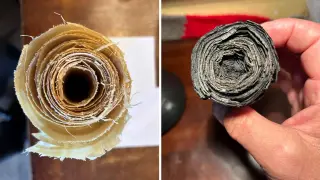
Researchers carbonized modern papyrus scrolls to mimic the Herculaneum library destroyed by Mount Vesuvius in 79 C.E. They found that trace lead in ancient ink can make hidden writing stand out in X-ray scans without unrolling fragile scrolls. The approach may help recover lost Greek and Roman works from the only intact ancient library known to survive.
The Herculaneum library, buried when Vesuvius erupted in 79 C.E., is the sole known complete ancient library. Its more than a thousand scrolls became carbonized, and attempts to unroll them can reduce the fragile papyrus to dust.
To mimic that material, students wrote passages on Egyptian papyrus using Japanese lampblack ink; the scrolls were rolled, sealed, and carbonized in a furnace. Lead in ink absorbed up to 25 times more X-rays than burned papyrus, making text visible in CT scans, while a handheld fluorescence scanner could flag promising scrolls.
This work could reshape how scholars, museums, and conservators approach fragile ancient texts. If lead screening proves reliable, it may help prioritize scrolls for non-destructive scanning, reducing risks to artifacts and opening lost Greek and Roman works to historians and the public. The impact may extend beyond Herculaneum, encouraging similar ink-chemistry studies elsewhere, though results will depend on whether comparable lead traces survive in other collections.