Ancient Moroccan Wall Points to Early Organized Defense in North Africa
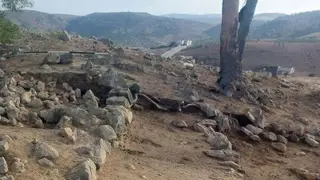
Excavations at Oued Beht in northwestern Morocco uncovered a large wall-like structure dated to roughly 4,000–3,500 years ago. Researchers describe it as the earliest known large-scale probable defensive construction in North Africa outside the Nile Valley. The find suggests communities in the Maghreb coordinated major building projects and may have competed over land, resources, or routes.
At Oued Beht in northwestern Morocco, a ridge above its namesake river yielded a wall-like feature in 2023 excavations. Researchers date it to the second millennium BC and call it the earliest known large-scale probable defensive work in North Africa beyond the Nile Valley.
The same site earlier held a farming complex from about 5,400–4,900 years ago, described as Africa’s earliest and largest agricultural complex outside the Nile Valley. Later, between the 11th and 13th centuries AD, people reused the ridge, rebuilding the possible defense and adding a hamlet or farm and cemetery.
This discovery may shift how archaeologists, educators, and local communities in the Maghreb view early North African societies, potentially encouraging more research, heritage protection, and tourism. It could also influence public narratives about African innovation and organization before written records. For residents near Oued Beht, renewed attention may bring opportunities alongside pressures around site preservation and land use. These effects remain speculative until further study and community consultation.