NASA Faces Uncertain Future for Low-Earth Orbit as SpaceX Plans to Exit Crew Transportation Market
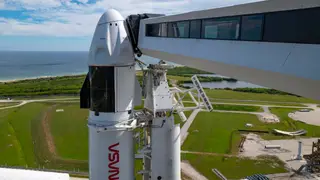
SpaceX has informed NASA it intends to retire its Crew Dragon spacecraft after 2030, despite the agency's two-decade strategy to foster a commercial low-Earth orbit economy with private companies. The company's decision to shift focus toward lunar activities and other priorities threatens NASA's vision for a robust human spaceflight ecosystem in low-Earth orbit beyond the International Space Station. Industry sources indicate the space agency now faces difficult choices as it reassesses its long-term approach to maintaining human presence and operations in low-Earth orbit.
NASA's two-decade initiative to build a thriving commercial space economy in low-Earth orbit is encountering significant headwinds as its primary transportation partner reassesses priorities. SpaceX's announcement that it will cease Crew Dragon operations beyond 2030 represents a fundamental shift in the company's strategic direction, as leadership increasingly focuses resources on Starlink satellite operations and next-generation Starship development.
The financial realities underlying this decision underscore a widening gap between NASA's needs and SpaceX's business interests. While the space agency invested substantial resources in Crew Dragon's development, SpaceX has already exceeded contractual obligations and now views NASA as a minor revenue stream—approximately 1 percent of projected future markets—making lunar and orbital infrastructure priorities more strategically valuable than continued human spaceflight services to low-Earth orbit.
This development could significantly reshape America's human spaceflight capabilities and the broader commercial space industry. NASA and emerging space station operators may face challenges securing reliable crew transportation, potentially delaying private orbital infrastructure projects and affecting the agency's long-term vision for sustained low-Earth orbit operations. Other companies developing crewed spacecraft or alternative transportation solutions may experience increased demand, though the timeline and viability of such alternatives remain uncertain. The situation may also influence future government-private sector partnerships in space exploration.