U.S. Solar Industry Shifts Focus to Execution and Storage Integration as Installations Surge
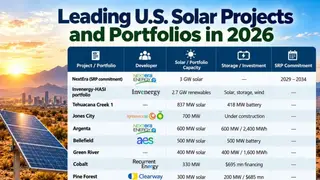
The United States is poised to add a record 43.4 GW of utility-scale solar capacity in 2026, representing a 60 percent increase from 2025 installations, with solar accounting for over half of all planned utility-scale generation additions. Leading developers like NextEra Energy Resources and Invenergy are prioritizing project execution, battery storage integration, and long-term power purchase agreements alongside pipeline development. Nearly 300 GW of additional solar capacity is targeted for completion between 2026 and 2031, with approximately 24 GW of battery storage expected to accompany new solar projects.
The American solar sector is undergoing a strategic transformation. Rather than simply accumulating future project permits and plans, major developers are now emphasizing the tangible metrics that determine commercial viability: completed installations, secured customer contracts, arranged financing, and operational battery systems. This shift reflects market maturation as the industry moves beyond explosive pipeline growth toward demonstrating it can actually construct and deliver power on schedule.
The integration of battery storage alongside solar projects represents a particularly significant development. By pairing solar generation with storage capacity, developers can time-shift electricity production to align with peak evening demand periods, substantially increasing the financial value of solar assets. Companies like NextEra, AES, and Clearway are embedding this hybrid model into their flagship projects, suggesting storage integration will become standard industry practice rather than an optional add-on.
This transition may accelerate renewable energy deployment by reducing financing and execution risks—institutional investors increasingly favor developers with proven operational track records and contracted revenue streams. Grid operators and utilities could benefit from storage-integrated projects that improve electricity reliability during peak hours. However, execution challenges around supply chains, interconnection bottlenecks, and skilled labor availability may ultimately determine whether projected 2026-2031 capacity additions materialize as planned, affecting climate targets and energy transition timelines.