India's Energy Storage Market Accelerates with Major Battery Procurement and Manufacturing Investments
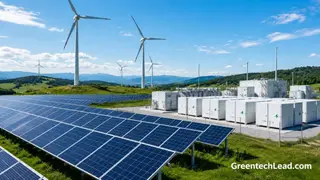
Maharashtra's state electricity distributor launched a 1 GW/4 GWh battery energy storage procurement with expansion options, targeting solar peak-hour charging and evening-overnight discharge to align generation with demand patterns. Advait Energy signed a 1 GWh battery cell supply agreement with HiTHIUM to support its expansion into domestic battery manufacturing, while CleanMax raised $300 million through green bond issuance to finance renewable energy projects across India. These developments signal accelerating investment in battery storage and manufacturing capabilities as India's renewable electricity market matures.
India's battery storage sector is experiencing significant momentum through multiple channels. Maharashtra's major procurement initiative addresses a critical challenge in renewable integration: the timing mismatch between solar generation and electricity demand. By capturing solar output during peak production hours and releasing it during evening and nighttime periods, the system enables more efficient use of renewable capacity. Simultaneously, domestic manufacturing capabilities are strengthening, with companies like Advait Energy establishing cell-supply partnerships to support their expansion into grid-scale battery assembly.
The financing landscape for renewable projects is also evolving. CleanMax's substantial green bond issuance demonstrates investor confidence in India's commercial and industrial renewable sector, where long-term corporate power agreements are becoming increasingly common as companies seek stable, predictable electricity costs. These interconnected developments—procurement, manufacturing, and capital availability—suggest the market is transitioning from early-stage projects to infrastructure-scale deployment.
These developments could strengthen India's renewable energy economics by reducing curtailment and enabling better grid management, potentially benefiting industrial customers through more reliable green power access. Domestic battery manufacturing may create employment and reduce import dependence. However, success depends on execution timelines and whether storage costs decline sufficiently to make evening dispatch economically competitive. The outcomes may influence how other emerging markets approach renewable integration and local manufacturing strategies.