Decades-Old Navigation Test Satellite Still Orbiting After Nuclear Test Damage
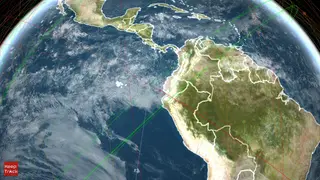
TRAAC, a U.S. Navy gravity-gradient stabilization test satellite launched in 1961, remains in orbit 65 years later despite suffering radiation damage from the Starfish Prime nuclear test conducted at high altitude in 1962. The 109-kilogram experimental satellite was designed to demonstrate passive attitude control using Earth's gravitational gradient for the Transit navigation constellation, the predecessor to modern GPS systems. Although the satellite's electronics were destroyed by radiation approximately 270 days after launch, its physical structure continues circling Earth more than 23,000 times.
TRAAC was built to solve a critical problem in satellite engineering: how to keep a spacecraft oriented in space without consuming fuel or adding weight through active control systems. By deploying a long boom and relying on Earth's uneven gravitational pull, the satellite demonstrated that passive stabilization was feasible—a principle that influenced spacecraft design for decades. The satellite shared its launch with Transit 4B, part of the Navy's broader effort to create a operational navigation network independent of ground-based systems.
The Starfish Prime test, conducted to study high-altitude nuclear effects, inadvertently created a natural experiment in satellite durability. While TRAAC's delicate electronics succumbed to radiation damage within nine months, its structure proved far more resilient. The satellite's empty shell continues orbiting at an altitude where atmospheric drag remains negligible, completing more than one orbit every two hours for the past 65 years.
This story illustrates how space infrastructure persists longer than expected, with potential implications for orbital debris management and long-term space environment monitoring. Engineers and space agencies may find value in studying TRAAC's orbital stability and materials durability over decades. However, as a defunct, uncontrolled object, the satellite also represents the growing challenge of tracking and accounting for aging debris in commonly used orbital zones where operational satellites operate.