Soviet-Era Communications Satellite Remains in Stable Orbit After 52 Years
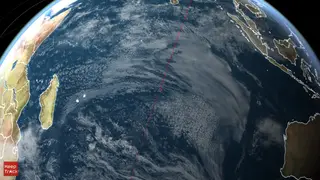
COSMOS 644, a 60-kilogram Soviet Strela-1M relay satellite launched in 1974, continues orbiting Earth at an altitude of 1,336 by 1,490 kilometers despite ceasing operations decades ago. The spacecraft was part of the Soviet Union's first operational tactical communications network, which used store-and-dump relay architecture to transmit messages between ground stations. Orbital tracking data indicates minimal atmospheric drag at its altitude, suggesting the inactive satellite will remain in space for years to come.
COSMOS 644 belongs to a pioneering Soviet military communications constellation that operated without real-time transmission capability. Instead, ground stations would deposit messages onto passing satellites, which retained the data until reaching their destination—a simple but effective approach for the era. Launched alongside seven identical units, this particular satellite functioned for roughly half a year before becoming inactive, a lifespan typical of early relay satellites whose power systems and electronics had limited durability.
The satellite's continued presence in orbit reflects the minimal atmospheric erosion at its altitude of approximately 1,400 kilometers. Recent tracking data shows its orbit remains remarkably stable, with only negligible decay over recent months. Minor fluctuations in its elliptical path result from natural gravitational influences rather than propulsive maneuvers, and orbital mechanics suggest the defunct spacecraft could persist for many years without intervention.
COSMOS 644's longevity exemplifies growing concerns about space debris accumulation in frequently-used orbital zones. Though individually small, thousands of defunct satellites and rocket stages occupy similar altitudes, potentially creating collision hazards for active missions. The satellite's stability may offer researchers opportunities to study long-term orbital behavior and refine debris-tracking models, while its presence underscores ongoing discussions about establishing protocols for managing or removing inactive spacecraft from crowded orbital regions.