Former War Crimes Investigator Criticizes Kosovo Government for Not Preparing Public for Guilty Verdicts
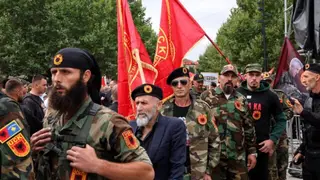
Clint Williamson, the prosecutor who led the initial investigation that established Kosovo's Specialist Chambers, states that Kosovar authorities failed to manage public expectations before four former KLA guerrilla commanders were convicted of war crimes in September. The four men, including former President Hashim Thaci and former Parliament Speaker Jakup Krasniqi, received sentences ranging from 13 to 25 years for crimes including torture and murder during the Kosovo War. Williamson reflects on the challenges of international justice amid current institutional dysfunction.
The Specialist Chambers tribunal, established in The Hague following Williamson's 2014 investigation into allegations documented by the Council of Europe, delivered its verdicts in mid-September after a 12-year span. The four convicted men held significant positions in post-war Kosovo: two served as head of state and parliamentary leader, while the other two held senior governmental roles. Their convictions addressed alleged abuses committed during the 1998-1999 conflict, including unlawful imprisonment and extrajudicial killings.
Williamson's critique centers on institutional communication rather than the court's judgment itself. He suggests that Kosovo's leadership did not adequately prepare citizens for a guilty verdict, implying public discourse may have emphasized alternative outcomes. The timing of this observation comes as protests continue within Kosovo, reflecting deep divisions over how the nation's wartime leadership should be evaluated by international justice mechanisms.
These convictions may reshape Kosovo's national narrative and civil cohesion at a sensitive moment. Citizens processing their country's recent history through international courts could experience conflicting loyalties between patriotic attachment to war leaders and recognition of documented crimes. The verdicts' domestic reception—whether accepted or rejected—may influence Kosovo's relationship with international institutions, its regional standing, and public trust in domestic governance. Conversely, sustained public opposition could signal challenges for transitional justice efforts across post-conflict societies.