Saturn's Moon Enceladus Could Harbor Ancient Metabolic Processes Supporting Life
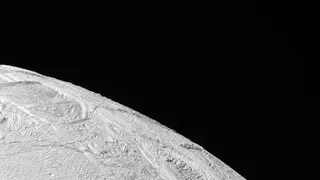
Two recent studies indicate that Saturn's icy moon Enceladus possesses chemical and environmental conditions capable of supporting primitive forms of metabolism that could sustain extraterrestrial life. The research suggests that detecting potential microbial life on this ocean world may be less challenging than scientists previously believed. These findings enhance the scientific rationale for exploring Enceladus as a priority target in the search for life beyond Earth.
Saturn's moon Enceladus has drawn scientific interest as a potential harbor for life due to its subsurface ocean and active geysers that eject material into space. Recent research findings strengthen the case that this distant world possesses the necessary chemical ingredients and environmental stability to support metabolic processes—the fundamental biological mechanisms through which organisms convert energy and nutrients.
The new studies suggest that life-detection missions targeting Enceladus might not require as sophisticated instrumentation or methodology as previously thought. By demonstrating that primitive metabolic systems could function in this environment, researchers have made the scientific case more compelling for prioritizing exploration of this ocean world in humanity's broader effort to understand whether life exists beyond Earth.
These findings could influence space agency priorities and funding decisions for future missions to the outer solar system. If Enceladus emerges as a more promising candidate for discovering extraterrestrial life, it may reshape international space exploration roadmaps and accelerate technological development for biosignature detection. The research could also affect public interest in astrobiology and the search for life beyond Earth, potentially strengthening support for long-term, resource-intensive exploration initiatives.