Ukrainian offensive achieves territorial gains despite manpower disadvantage, Zelensky reports
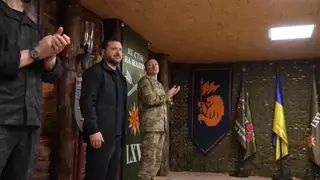
President Zelensky visited the Lyman sector to award soldiers from the 66th Separate Mechanized Brigade who recovered more than 125 square kilometers of territory through Operation Vivaldi, a coordinated Third Army Corps offensive. The operation, described as a rare Ukrainian success achieved while facing significant personnel disadvantages, has resulted in over 2,000 Russian losses and 250 prisoners captured across three phases since mid-September. Ukrainian forces liberated five villages including Ridkodub, Nove, and Katerynivka, employing repressed drone assets and innovative technology to overcome their numerical inferiority.
Operation Vivaldi represents a coordinated military campaign by Ukraine's Third Army Corps conducted across the Donetsk and Luhansk border region. The offensive has unfolded in three distinct phases since mid-September, with each phase announced separately as villages were reclaimed from Russian control. The territorial recovery totals over 125 square kilometers, with five villages now under Ukrainian administration following the most recent phase.
The operation's success is attributed to Ukraine's ability to neutralize Russian unmanned aerial systems and disrupt supply lines, compensating for numerical disadvantages in personnel. Ukrainian forces have employed innovative tactical approaches, including ground-based drone technology, to achieve these gains. The third phase alone resulted in significant Russian casualties, with reported losses exceeding 2,000 soldiers and over 250 captured.
This operational success could strengthen Ukrainian morale and international confidence in the country's military capabilities during a prolonged conflict. The territorial gains may provide strategic advantages in the Lyman sector and could influence future negotiations regarding the war's resolution. Domestically, the recovery of populated areas may affect displaced populations seeking to return home. However, the sustainability of such gains amid ongoing manpower constraints remains uncertain, and the broader trajectory of the conflict continues to depend on external military support and resource allocation.