Hardware Trust Frameworks Expand Beyond Boot Protection Into Platform-Wide Security Orchestration
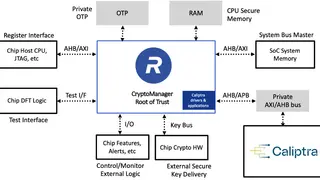
As data center architectures grow increasingly heterogeneous with diverse processors and accelerators, establishing trust across all components requires security grounded in hardware rather than relying solely on operating system protections. The Caliptra security architecture functions as a foundation for device identity, code integrity verification, and cryptographic asset protection while enabling attestation throughout device lifespans. Deploying hardware roots of trust in production systems addresses rising threats targeting system software stacks, becoming essential as AI workloads and training data grow more valuable.
Modern data centers increasingly rely on diverse hardware components—processors, accelerators, memory systems, and specialized controllers—working in concert to handle demanding computational tasks. This heterogeneity creates a security challenge: establishing consistent trust mechanisms across equipment from multiple manufacturers requires a standardized foundation rather than isolated, device-specific protections.
Caliptra addresses this by offering an open-source framework that establishes hardware-based identity verification, validates software integrity during system startup, and maintains cryptographic protections throughout device operation. The project's transparent development model enables security professionals to audit its design and implementation, potentially facilitating broader adoption across the industry as organizations seek interoperable trust mechanisms in their infrastructure stacks.
Widespread hardware security orchestration could affect cloud providers, data center operators, and enterprises by reducing attack surface vulnerabilities in their computing infrastructure. Organizations managing AI systems and sensitive proprietary workloads may experience enhanced protection against sophisticated attacks targeting system firmware and lower-level software layers. However, adoption barriers—including implementation complexity and coordination across supplier ecosystems—could slow deployment. The approach may also influence how security responsibilities are distributed between hardware manufacturers and software operators in enterprise environments.