Polar Shift More Dramatic Than Previously Believed, Study Reveals
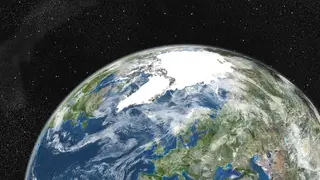
Researchers studying ancient sea-level changes have found that Earth's geographic poles undergo true polar wander events more frequently and dramatically than previously understood. Unlike the constantly-shifting magnetic poles, the geographic poles are normally stable but can move when plate tectonics and mantle convection redistribute mass within Earth, causing the planet's spin to shift. By analyzing geological records of sea-level changes rather than relying on ancient magnetic data, scientists discovered distinctive patterns that indicate these polar movements occur more often than magnetic rock evidence had suggested.
Geographic poles differ fundamentally from magnetic poles in their behavior and causes. While Earth's magnetic poles constantly drift and occasionally reverse due to changes in the planet's magnetic field, the geographic poles—which mark the axis of rotation—remain relatively stationary under normal circumstances. They shift only when mass redistributes throughout Earth's interior via plate tectonics and mantle convection, altering the planet's rotational balance and forcing the outer layers to realign.
The research methodology represents a significant advance in measuring polar movement. Rather than relying on magnetic signatures preserved in ancient rocks, which have produced inconsistent results, scientists examined sea-level records for a distinctive pattern. When true polar wander occurs, ocean water responds faster than solid rock to changes in rotational forces, creating a characteristic "beach ball" pattern of rising and falling sea levels across hemispheres—a signature unlikely to result from other geological processes.
Understanding polar wander frequency and speed could refine climate modeling and long-term geological predictions. If polar shifts influence climate systems as suggested, scientists may need to reassess historical climate variations and improve projections for future changes. Additionally, this research may help explain geological patterns in fossil distributions, ocean circulation, and land-sea configuration across deep time. However, since these events occur over millions of years, immediate practical applications for human societies remain limited, though the work advances fundamental Earth science understanding.