Planet's Solid Layers Shift Repeatedly, New Analysis Reveals
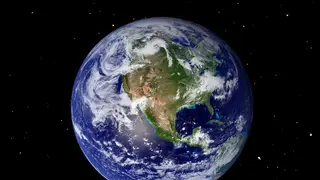
Researchers examining ancient sea-level patterns have found evidence that Earth's outer layers have undergone complete rotations at least four times over the past 320 million years. The phenomenon, known as true polar wander, occurs when mass imbalances in the planet's mantle and crust cause the solid outer layers to tilt and shift around the liquid inner core. This massive planetary reorientation continues today at approximately 10 centimeters per year, primarily driven by melting ice caps.
True polar wander represents a fundamental planetary process where Earth's solid exterior realigns itself due to density variations within the mantle and crust. The mechanism operates through mass redistribution around the planet's liquid core, causing the outer layers to gradually shift position. Because Earth's equatorial regions contain more material than polar areas, any imbalance in crustal composition can trigger this reorientation.
The research breakthrough involved examining paleographic records—maps of ancient continental and oceanic positions across millions of years—to identify a distinctive flooding signature. When the solid Earth tilts relative to the water layer, it creates a characteristic four-quadrant pattern where two opposite continental regions submerge while two others emerge. This geological fingerprint proved more reliable than traditional magnetic rock records for identifying when these events occurred.
This research may inform long-term climate and geological planning by clarifying how planetary processes affect ocean circulation patterns and regional climates over geological timescales. Understanding the frequency and mechanics of true polar wander could help scientists better model Earth's past climate shifts and potentially refine predictions about future continental positioning. However, the current 10-centimeter-annual movement pace poses no immediate practical concerns for contemporary infrastructure or human populations.