Four-Member Crew Launches to International Space Station for Half-Year Mission
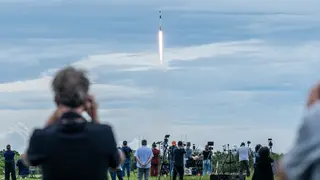
A SpaceX Falcon 9 rocket successfully launched four crew members—two NASA astronauts, a Russian cosmonaut, and a Canadian astronaut—to the International Space Station for a planned six-month stay. The mission was delayed from September due to repairs needed on the Crew Dragon's propulsion system, with three of the four crew members making their first spaceflight. One crew member's wife is expected to give birth during the mission, making the family one of only a few couples in history to have a child born while one parent is in space.
The Crew-13 mission represents a significant milestone in international space cooperation, bringing together expertise from multiple nations and space agencies. Three of the four crew members are making their inaugural spaceflight, including two former military test pilots from NASA and a former submarine officer from Russia's space program. Commander Jessica Watkins, the sole veteran among them, holds a doctorate in geology and previously visited the station in 2022.
The mission encountered a setback when engineers discovered a faulty valve in the Crew Dragon's propulsion system, necessitating repairs and pushing the launch from September into October. Such technical delays, while frustrating, demonstrate the rigorous safety protocols governing human spaceflight operations.
This mission illustrates how space exploration continues to inspire public interest while highlighting both scientific advancement and the human dimension of spaceflight. The personal story of Kutryk's expanding family during his orbital stay may resonate with audiences, potentially reinforcing public support for space programs. Additionally, the collaborative nature of ISS operations—involving American, Russian, and Canadian personnel—demonstrates how space initiatives can foster international partnership, though such cooperation may face geopolitical pressures. The mission's scientific contributions and technological achievements could influence future funding and recruitment decisions within space agencies.