SpaceX Rideshare Mission Deploys 130 Payloads Including AI Datacenter and Environmental Monitoring Satellites
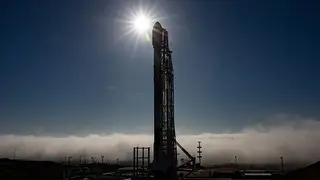
SpaceX launched 130 diverse payloads aboard a Falcon 9 rocket from Vandenberg Space Force Base, including a Google artificial intelligence prototype, environmental monitoring equipment, and pharmaceutical manufacturing equipment destined for polar orbit. The Transporter-18 mission was the second of three SpaceX launches completed on the same day, utilizing a booster on its 25th flight. The payloads were deployed across an 11-minute window at approximately 54 minutes into the flight.
SpaceX's Transporter-18 mission represents the growing commercial viability of rideshare launches, where multiple organizations share a single rocket flight to reduce costs. The mission's payload diversity—spanning artificial intelligence infrastructure, environmental science instruments, and manufacturing experiments—underscores how orbital access has become integral to advancing multiple technological and scientific fields simultaneously.
The booster's 25th flight demonstrates the economic advantage of rocket reusability. By launching the same vehicle repeatedly with minimal refurbishment, operators can distribute development costs across many missions, making space access increasingly affordable for smaller companies and research institutions that previously lacked resources for dedicated launches.
This mission could accelerate innovation across sectors dependent on orbital platforms, from climate monitoring to pharmaceutical development and AI infrastructure. Broader access to space may democratize capabilities once exclusive to well-funded entities, potentially expanding competition and discovery. However, increased launch frequency raises questions about space debris management and long-term sustainability of the orbital environment, concerns that may shape future regulatory frameworks around commercial spaceflight operations.