Falcon 9 Sends NASA Crew-13 Team to Orbiting Laboratory for Extended Research Operations
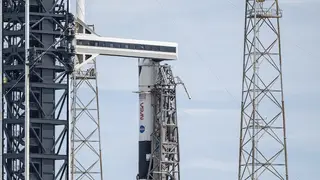
NASA and SpaceX successfully launched four crew members aboard a Falcon 9 rocket to the International Space Station, with docking scheduled about eight hours after liftoff—the fastest Dragon transit time to date. Mission commander Jessica Watkins became the first NASA astronaut to fly twice on a SpaceX Dragon spacecraft, while her three crewmates—two military test pilots and a former Russian submarine officer—are making their first spaceflights. The booster used for the launch was on its third flight after previously supporting Starlink and crew missions.
The Crew-13 mission represents a milestone in commercial spaceflight partnerships, with the Dragon spacecraft achieving the fastest transit time to the International Space Station to date at approximately eight hours. The booster supporting this launch is being recycled for its third operational flight, demonstrating SpaceX's commitment to reusable rocket technology and cost efficiency in space transportation.
The four-person crew brings diverse expertise to their six-month research expedition. While Commander Watkins returns for her second Dragon flight following previous work on lunar mission infrastructure, her three crewmates are experiencing spaceflight for the first time, including a Russian cosmonaut whose participation underscores ongoing international cooperation in orbital research despite geopolitical tensions.
This mission may advance the normalization of commercial crew transportation to orbital laboratories, potentially reducing costs associated with space access for research institutions. The success of repeated booster landings could encourage other space agencies and private companies to adopt reusable vehicle programs. Additionally, the international crew composition signals that collaborative scientific endeavors in space may continue despite terrestrial challenges, benefiting global research initiatives in microgravity environments.