German Chancellor Warns Russia Could Target NATO if Ukraine Conflict Remains Unresolved
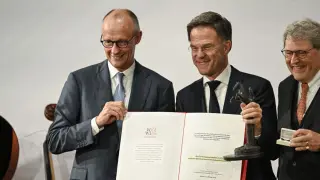
German Chancellor Friedrich Merz cautioned that Europe's security hinges on halting Russian military operations in Ukraine, asserting that Moscow poses a direct threat to NATO itself if left unchecked. Speaking at a ceremony honoring NATO with the Peace of Westphalia award, Merz emphasized that maintaining unified European support and military strength is critical for both Ukraine's survival and continental security. He argued that Russia's full-scale invasion has rendered Ukraine's fate inseparable from Europe's own defense.
German Chancellor Friedrich Merz delivered his warning at a ceremony in Münster where NATO received the International Award of the Peace of Westphalia, highlighting the symbolic significance of the occasion. Merz drew direct parallels between current Russian aggression in Ukraine and potential future threats to NATO member states, specifically mentioning Baltic nations and European cities as potential targets. He emphasized that Russia's ongoing campaign against Ukrainian civilian infrastructure—including schools, hospitals, and power plants—demonstrates the scale of Moscow's disregard for international law.
Merz stressed that successful deterrence and diplomatic engagement with Russia depend equally on military preparedness and political cohesion among European and transatlantic partners. He underscored the necessity of maintaining sustained U.S. commitment to European security, noting that coordinated pressure has proven effective in preserving American involvement in Ukraine policy.
This statement may influence European defense spending and NATO policy discussions by reinforcing arguments for increased military investment and transatlantic coordination. Policymakers across NATO member states could reference Merz's remarks when justifying security budgets or military aid decisions. The warning could affect public perception of Ukraine support among European voters by framing it as continental self-defense rather than distant conflict assistance, potentially shifting political calculations around aid sustainability.