SpaceX Launches Three Missions in Single Day, Including First Falcon Heavy Flight for U.S. Intelligence Agency
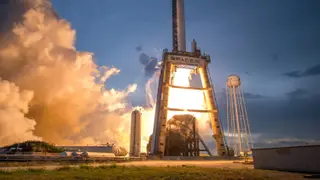
SpaceX completed three orbital launches on October 1, 2026, highlighted by Falcon Heavy's maiden flight carrying a classified National Reconnaissance Office payload from Cape Canaveral. The day's operations also included a crewed mission to the International Space Station and a rideshare deployment carrying 130 payloads from Vandenberg Space Force Base. The combined activity brings the total Starlink constellation to nearly 13,000 launched satellites, with ongoing monitoring of potential collision risks among operational units.
SpaceX's October 1st activity demonstrates the company's expanding operational capacity across multiple launch facilities and mission types. The three separate liftoffs—from Kennedy Space Center and Vandenberg Space Force Base—involved different rocket configurations and payload classes, ranging from human spaceflight to classified government reconnaissance to commercial rideshare operations. This consolidated launch schedule reflects both SpaceX's growing launch cadence and increased demand from government and commercial customers for heavy-lift and frequent-access capabilities.
The successful Falcon Heavy deployment for the National Reconnaissance Office marked a significant milestone, as it represents the first time the NRO has utilized SpaceX's three-core heavy-lift system despite nearly two decades of partnership involving 22 previous Falcon 9 missions. The side booster reuse—with both cores recently flown on an earlier payload—exemplifies SpaceX's reusability strategy, though the center core was expended, suggesting payload weight or mission requirements necessitated that approach.
The day's activities could affect space infrastructure sustainability and national security capabilities. Multiple operational Starlink satellites in collision-probability monitoring may signal growing space traffic management challenges as constellations expand. The NRO's shift to Falcon Heavy could reshape U.S. intelligence satellite deployment timelines and reduce reliance on traditional heavy-lift alternatives. Additionally, the consolidated launch pace may influence commercial spaceflight market dynamics and international competition in launch services, affecting how space access costs and availability evolve for future missions.