Crew-12 Returns From ISS After Completing Microgravity Research Portfolio
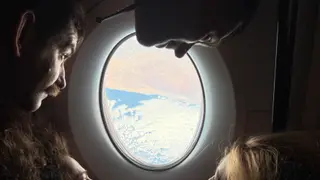
Four international astronauts are returning to Earth following their mission supporting various experiments aboard the International Space Station. During their stay, the crew contributed to research spanning crystal growth for pharmaceuticals, quantum physics advancements, bone tissue engineering, and stem cell multiplication in microgravity conditions. Their work demonstrates how the orbital environment enables scientific discoveries with applications ranging from cancer treatment to next-generation computing technologies.
The Crew-12 mission represents a comprehensive research campaign leveraging the unique properties of orbital microgravity. The four-person international team conducted experiments across multiple scientific domains, including pharmaceutical development where crystal formation behaves differently without gravity's influence, enabling researchers to refine drug structures. Additionally, quantum physics research benefited from extended observation periods of ultracold atoms, potentially advancing technologies foundational to modern electronics and renewable energy systems.
Beyond physics and chemistry, the mission addressed biological challenges relevant to both space exploration and terrestrial medicine. The crew tested bone regeneration scaffolds designed to counteract the accelerated bone loss that occurs in weightlessness, generating data applicable to treating osteoporosis and protecting future deep-space explorers. Complementary studies examined antibiotic-resistant microorganisms in closed environments, offering insights for both spacecraft safety and Earth-based infection control strategies.
This research portfolio could influence multiple sectors over coming years. Pharmaceutical companies may accelerate drug development timelines using microgravity insights, potentially affecting treatment availability. Medical researchers working on osteoporosis and tissue engineering could gain practical knowledge improving patient outcomes for conditions affecting hundreds of millions globally. Space agencies planning extended missions beyond Earth orbit may benefit from antibiotic-resistance data improving crew safety protocols. The work also demonstrates international scientific collaboration's value, potentially strengthening institutional partnerships across NASA, ESA, and Roscosmos.