U.S. Interference in Brazilian Election Could Harm Trump Administration's Preferred Candidate
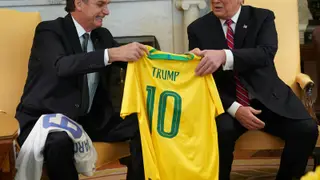
The Trump administration has employed sanctions, tariffs, and delegitimization tactics to support Flávio Bolsonaro in Brazil's upcoming presidential election against incumbent Luiz Inácio Lula da Silva, but these efforts may prove counterproductive with voters. U.S. officials have threatened military action, designated criminal groups as terrorist organizations, hosted pro-Bolsonaro influencers at diplomatic events, and sent State Department representatives to undermine the election's integrity. Brazilian voters appear to be reacting negatively to the transparent foreign interference, potentially shifting opinion away from the administration's preferred candidate.
The Trump administration has employed multiple policy instruments to influence Brazil's election outcome, including economic measures like tariffs and sanctions alongside diplomatic actions. State Department personnel have been deployed to question the legitimacy of Brazil's electoral processes, while U.S. diplomatic venues have been used to amplify pro-Bolsonaro messaging through social media figures. These coordinated efforts represent an unusually transparent approach to election interference by a sitting U.S. administration.
Brazilian public response to these interventions appears to be producing unintended consequences for U.S. objectives. Rather than consolidating support for the administration's favored candidate, the visible foreign pressure may be alienating voters who view such external involvement as a threat to national sovereignty. The election is positioned as competitive, with voting beginning imminently.
This situation could affect U.S.-Brazilian bilateral relations and Brazil's domestic political stability. If voters reject the externally-favored candidate partly due to perceived U.S. interference, it may strain diplomatic ties and reduce American influence in a major Latin American economy. Conversely, such interference could undermine democratic norms in both countries and set precedents for foreign involvement in elections, potentially destabilizing international democratic processes more broadly. The outcome may reshape how nations approach electoral competition across borders.