Miniature Orbital Satellites Enable Direct Measurement of Atmospheric Greenhouse Gas Concentrations
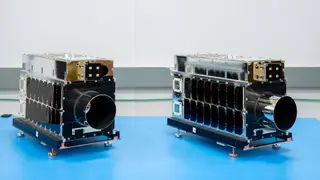
Two compact satellites weighing 33 pounds each have been deployed into orbit at an altitude of 310 miles to monitor greenhouse gas emissions globally. These small satellites join a broader constellation of spacecraft designed to provide continuous measurement of atmospheric composition. Their lightweight design and orbital positioning enable efficient data collection for climate monitoring applications.
The deployment of these two small satellites represents an advancement in atmospheric monitoring technology. By positioning spacecraft in low Earth orbit at approximately 310 miles altitude, researchers gain vantage points for tracking greenhouse gas distribution across the planet. The lightweight construction of these 33-pound units allows for more efficient launch and operational costs compared to larger monitoring systems, while their orbital configuration supports regular data collection across different geographic regions.
This mission contributes to an expanding network of orbital platforms dedicated to measuring atmospheric composition. Such continuous observation systems play a foundational role in climate science by providing empirical measurements of gases that influence Earth's climate. The ability to gather global data consistently helps inform understanding of emission patterns and atmospheric dynamics over time.
These satellites could enhance climate researchers' capacity to track greenhouse gas distribution patterns and validate ground-based measurements. By providing consistent global observation data, the mission may support more informed climate assessments and emissions monitoring. The findings could potentially be relevant to policymakers and environmental organizations seeking detailed atmospheric composition information, though the direct societal impact would depend on how this data is interpreted and applied within broader climate science and policy frameworks.