Two New Sea Spider Species Identified in Salish Sea After Century-Long Documentation Gap
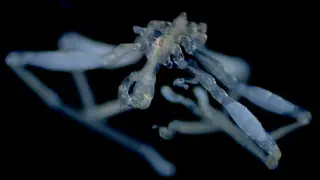
Researchers discovered two previously undescribed sea spider species in the Salish Sea near the Pacific Northwest, marking the first new species identified from the region in nearly a century. The newly documented species display distinctive features including bright red eyes, setae-covered legs, and unusual three-lipped mouth structures. This discovery addresses a significant knowledge gap about regional marine invertebrate diversity, which is critical for understanding how climate change and human activity affect these vulnerable organisms.
Sea spiders represent an evolutionary line stretching back roughly half a billion years, positioning them among Earth's most ancient marine animals. Unlike their terrestrial cousins, these arthropods never colonized land and instead developed increasingly specialized adaptations for ocean life. The newly identified Salish Sea species exemplify this diversity, exhibiting striking physical characteristics such as crimson eyes and densely setae-covered appendages that reflect their specialized ecological roles.
The identification gap reflects broader challenges in marine science: cataloging ocean biodiversity remains incomplete despite its importance for conservation. Toler-Scott's year-long survey, conducted across multiple Pacific Northwest locations at depths up to 18 meters, demonstrates how targeted field research can yield significant discoveries. This work underscores that fundamental taxonomic knowledge—simply knowing which species exist in a given region—remains essential before scientists can meaningfully assess how environmental pressures affect marine communities.
Understanding local marine species composition may influence regional environmental management and climate adaptation strategies. Fisheries managers, conservation planners, and policymakers could benefit from improved baseline data about Salish Sea invertebrates when evaluating ecosystem health and establishing protection priorities. However, translating taxonomic discoveries into policy changes typically requires sustained research funding and institutional commitment beyond individual studies, meaning this discovery's practical impact may depend on whether it catalyzes broader taxonomic efforts in the region.