Second Named Cretaceous Bird Species Discovered in Australian Fossil Record
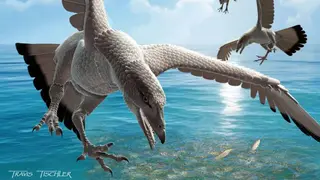
Paleontologists have identified Tenuicruris piscanexum, an early bird species from 105 million years ago that significantly expands Australia's extremely limited Cretaceous bird fossil collection. The discovery, based on well-preserved leg bones found near Richmond, represents only the second named Cretaceous bird species from the continent and provides the first documented tarsometatarsus bone from Australian deposits of that era. The find contributes to understanding the diversity and ecology of ancient Australian fauna, particularly the rich inland sea ecosystem preserved in the Toolebuc Formation.
Australia's Cretaceous bird record has long been fragmentary, consisting chiefly of isolated skeletal elements scattered across multiple sites. The Richmond locality, near a quarry open to public fossil collection, yielded both specimens of the newly named species—a well-preserved lower leg bone measuring 6.5 centimeters and a complete lower foot bone. These discoveries belong to Enantiornithes, an extinct lineage of early birds that thrived globally during the Cretaceous before vanishing at the mass extinction event 66 million years ago.
The Toolebuc Formation, dating to 105 million years ago, preserves evidence of a shallow inland sea teeming with diverse marine reptiles and fish. Adding birds to this ecosystem inventory strengthens our understanding of how these early avians coexisted with ichthyosaurs, plesiosaurs, and pterosaurs in ancient Australian waters. With only two named Cretaceous bird species from the continent, each new specimen significantly shifts paleontologists' ability to reconstruct regional biodiversity and ecological relationships during this remote period.
This discovery could enhance paleontological teaching and museum education by providing tangible Australian examples of early bird evolution during the Cretaceous. The find may also attract increased public interest in fossil sites like the Richmond quarry, potentially supporting local science tourism and community engagement with paleontology. Academic researchers may benefit from expanded comparative data for assessing how avian diversity and distribution varied across ancient continental regions.