Ancient Mammal Shows Platypus-Like Adaptations and Complex Tooth Replacement Strategy
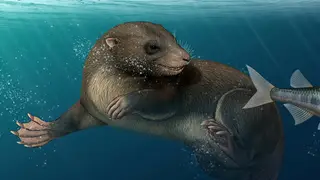
Dongoconodon platycauda, a 120-million-year-old mammal discovered in China, possessed webbed appendages similar to modern platypuses and exhibited an unusual tooth replacement pattern with up to three generations of teeth at certain positions. CT scans of the nearly complete skeleton revealed teeth in various stages of eruption and development, suggesting this predatory mammal replaced its teeth more frequently than most modern mammals. The discovery provides insights into evolutionary adaptations among early mammals that coexisted with dinosaurs during the Cretaceous period.
Dongoconodon platycauda represents a fascinating case of convergent evolution, where an Early Cretaceous mammal independently developed swimming features strikingly similar to the modern platypus despite living 120 million years apart. The animal's skeleton revealed anatomical clues to its aquatic lifestyle: elongated finger and toe bones with attachment points for webbing, plus a distinctively flattened tail structure matching that of contemporary semiaquatic rodents. Comparative analysis of limb proportions confirmed the creature occupied an ecological niche shared by today's water-dwelling mammals.
The tooth replacement system sets this discovery apart from nearly all known mammals, living or extinct. Rather than following the standard pattern of two tooth generations, Dongoconodon retained the ancestral trait of repeated replacement, possibly driven by its carnivorous diet and the wear demands of hunting aquatic prey. This feature connects it to related eutriconodonts and challenges conventional understanding of how early mammals organized their dental development.
This discovery may refine paleontologists' models of early mammalian evolution and ecological diversity during the Age of Dinosaurs. Educational institutions and natural history museums could incorporate the findings into exhibits exploring how ancient mammals adapted to varied environments. The research might also interest evolutionary biologists studying convergent evolution and dental development, potentially informing broader discussions about adaptive mechanisms in vertebrate evolution and survival strategies across geological time periods.