South African fossils push back timeline for early human ancestor species
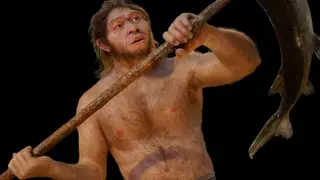
Researchers analyzing 18 hominin fossils from South Africa's Drimolen Main Quarry have found evidence that Homo erectus inhabited the region approximately 2 million years ago, earlier than previously documented. The fossils, excavated over three decades, included specimens that had not yet been formally studied or described in scientific literature. The discovery also provides insights into the evolution of Paranthropus robustus, another hominin species that coexisted during this period.
A collection of 18 hominin fossils discovered at South Africa's Drimolen Main Quarry has yielded important chronological findings about early human ancestors. Among these specimens were previously unstudied examples that researchers have now formally examined and documented for the first time, allowing scientists to establish that Homo erectus lived in the region roughly 2 million years ago—pushing back the known timeline for when this species inhabited that area.
The excavations spanning three decades have also illuminated the concurrent existence and evolution of Paranthropus robustus, a related hominin species that shared the same geographical and temporal space. These discoveries from a single South African site offer a window into how multiple hominin lineages developed and coexisted during the early Pleistocene epoch.
This research may reshape understanding of human evolutionary pathways and migration patterns among scientists and educators. Academic institutions could incorporate revised timelines into paleoanthropology curricula. For the broader public, such findings could deepen awareness of Africa's role in human origins. Museums and science communicators may use this evidence to update exhibits and educational materials. The study demonstrates how decades-long excavation projects can yield insights even when analyzing previously overlooked specimens.