Early Medieval Fortress and Distinctive Water Infrastructure Revealed at German Archaeological Site
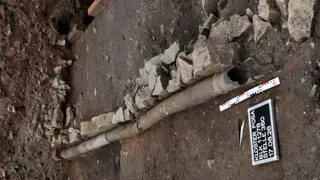
Excavations at Posaer Berg in Saxony-Anhalt have uncovered substantial remains from multiple periods of occupation at this significant early medieval settlement. Among the findings is a rare clay water pipe that represents an important artifact for understanding medieval infrastructure and daily life. Research at the site, ongoing since 2017, continues to reveal details about the fortified settlement's ninth-century phases and later developments.
Posaer Berg in Saxony-Anhalt represents a layered archaeological record spanning numerous historical phases, with particular emphasis on the ninth century when fortification systems were in place. The excavation work, which began in 2017, has systematically documented the settlement's defensive and residential structures across different periods of occupation, providing insight into how communities organized themselves during this transformative era in European history.
The discovery of a clay water pipe stands out as a specialized artifact that illuminates the sophistication of early medieval engineering. Such conduits reveal how settlements managed water resources and distribution systems, demonstrating that technological solutions to practical infrastructure challenges were more developed than previously understood, with implications for how scholars assess daily life and community management during this period.
This excavation may benefit academic understanding of early medieval settlement patterns and technological capabilities across Central Europe. The findings could influence how historians and archaeologists interpret regional development and social organization during the ninth century. Additionally, the site may attract scholarly attention that refines broader knowledge about medieval infrastructure, potentially informing related research at comparable sites. The work could also enhance local cultural heritage awareness in Saxony-Anhalt.