Latin America's Wind Energy Capacity Set to Double with Major Projects in Brazil and Chile
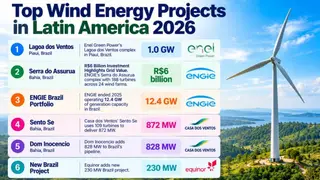
Latin America's onshore wind capacity is projected to exceed 120 GW by 2035, more than doubling current levels as Brazil, Chile, and Peru develop projects with multi-billion-dollar investments. Major complexes like Enel's Lagoa dos Ventos in Brazil demonstrate the region's potential, combining high-capacity factors with grid integration and transmission infrastructure. Offshore wind development could add significant capacity, with regional projections reaching 40.6 GW by 2045.
Latin America's wind sector is experiencing a significant transformation driven by technological advances and substantial capital deployment. Projects like Enel's Lagoa dos Ventos and ENGIE's Serra do Assuruá showcase how developers are prioritizing annual energy output and grid connectivity alongside raw capacity figures, recognizing that transmission infrastructure integration directly influences project viability and returns.
Turbine innovation is reshaping project economics across the region. Newer 8 MW-class machines enable developers to achieve gigawatt-scale capacity with fewer installations, potentially streamlining construction logistics, though larger equipment demands enhanced infrastructure and specialized handling capabilities during development phases.
The expansion of wind capacity across Latin America could benefit multiple stakeholders: energy consumers through increased grid diversity and potentially lower electricity costs; industrial manufacturers reliant on power access; and investors seeking renewable energy exposure in emerging markets. Regional employment in manufacturing, construction, and operations maintenance may expand. However, communities hosting projects and transmission corridors may experience environmental and land-use considerations requiring careful management and stakeholder engagement.