Battery Storage Market Surges as Global Capacity Additions Nearly Double
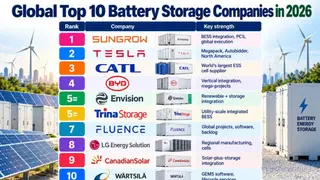
Global battery energy storage shipments reached 461.3 GWh in the first half of 2026, up 71 percent year-over-year, with markets outside China accounting for over half of global additions for the first time. CATL leads in battery-cell production with 27.1 percent market share, while Sungrow ranks first in comprehensive system integration capabilities across technology, supply chain, and financial strength. Lithium iron phosphate technology dominates the market at 90 percent of deployments as utilities increasingly deploy batteries to integrate renewable energy and manage grid demand.
The battery storage sector is experiencing unprecedented acceleration, with global capacity additions climbing steadily since 2021. The market's expansion reflects a fundamental shift in how power grids operate, as utilities increasingly recognize energy storage as essential infrastructure for managing variable renewable sources and meeting fluctuating demand patterns. This growth trajectory indicates storage technology has transitioned from experimental to commercially viable at scale.
Geographic distribution of manufacturing and deployment is undergoing significant restructuring. While China maintains dominance in battery-cell production and system design, markets beyond China now represent a majority of new installations for the first time. This shift suggests supply chains are diversifying and regional energy infrastructure development is accelerating across North America, Europe, and other territories.
The expansion of battery storage capacity could reshape electricity markets and grid reliability across multiple regions. Energy storage may reduce dependence on fossil fuel peaking plants while enabling greater renewable energy integration, potentially affecting power generation economics and employment in traditional utility sectors. Consumers might experience more stable electricity prices and improved grid resilience, though widespread deployment requires continued technological advancement and substantial capital investment that could influence energy costs in the near term.