Supreme Court expresses doubt about allowing states to sue oil companies over climate damages
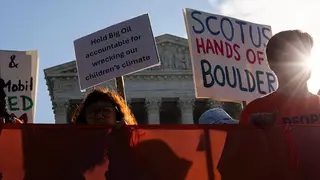
The Supreme Court heard arguments in a case where Boulder, Colorado seeks to hold major oil producers responsible for climate-related damages through state courts, with a conservative majority appearing skeptical of the effort. Justices expressed concerns that state climate lawsuits would upset the balance between federal and state authority, noting that air and water pollution have previously been classified as federal regulatory matters. The court's decision could determine whether dozens of pending lawsuits from cities and counties seeking damages under state law can proceed nationally.
Boulder County initiated legal action against two major petroleum corporations, alleging that their decades-long efforts to minimize climate change risks—despite internal research confirming the dangers—contributed to intensified wildfire damage within the county. The oil companies have challenged the lawsuit's validity, arguing that such environmental claims belong in federal regulatory systems rather than state courts. The justices' skepticism suggests they may view this matter as fundamentally a federal responsibility, particularly given previous court decisions classifying pollution regulation as a national concern.
The case's broader implications extend to approximately fifty similar lawsuits filed by municipalities nationwide seeking financial compensation for climate-related harm. Chief Justice Roberts expressed concern that allowing Boulder to proceed would likely trigger a wave of comparable lawsuits across the country, each potentially using similar legal frameworks. The court's ruling may therefore establish whether this litigation strategy remains viable as a mechanism for holding fossil fuel producers accountable through the judicial system.
A decision favoring the oil companies could shield major fossil fuel producers from state-court liability, potentially affecting climate damage claims from numerous communities. Conversely, ruling for Boulder might expose energy corporations to significant financial exposure across multiple jurisdictions while establishing precedent for other municipalities. The outcome could reshape how climate responsibility is pursued—whether through federal legislation and regulation, state courts, or political processes—affecting both corporate liability frameworks and local governments' ability to recover costs from environmental harms.