U.S. Early Warning Satellite Completes Orbital Repositioning to Western Hemisphere Slot
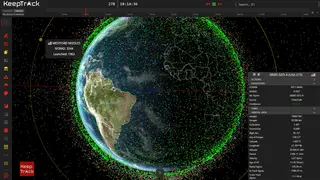
The SBIRS GEO-4 military satellite has settled into a new orbital position at 21.2 degrees west, completing a maneuver detected on September 20, 2026. The satellite, launched in 2017 for the U.S. Space Force, executed a relatively small orbital adjustment totaling 3.18 meters per second of velocity change. Tracking systems expect the satellite to remain within 0.5 degrees of its new longitude unless it undertakes further repositioning.
The SBIRS GEO-4 satellite, part of the U.S. Space Force's early warning system since its 2017 launch, recently completed a fine-tuning adjustment to its orbital position. The maneuver, detected in mid-September 2026, involved a modest velocity change spread across multiple directional components, with the largest adjustment occurring in the radial direction. This type of repositioning allows military surveillance assets to maintain optimal coverage over designated regions.
The satellite's new position at 21.2 degrees west longitude places it in a western hemisphere slot suitable for monitoring activities across the Americas. Tracking analysts project the satellite will maintain this location within a narrow tolerance band, suggesting the adjustment has successfully achieved its intended objective. Such orbital maintenance operations are routine for aging reconnaissance platforms seeking to extend their operational utility.
Military space capabilities affect national security policy and international relations, potentially influencing how nations monitor activities across vast oceanic and continental regions. The adjustment demonstrates the ongoing operational relevance of aging satellite systems, which may shape decisions about future reconnaissance platform development and deployment strategies. For civilian space-watching communities, such maneuvers provide insights into military space operations and satellite lifecycle management, though the full implications for geopolitical monitoring remain within classified assessments.