India's Oil Expansion in Brazil Alongside Regional Diplomatic and Infrastructure Moves
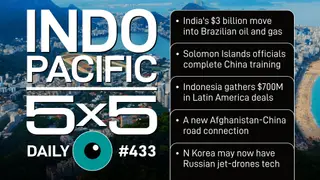
India's state oil company BPCL is preparing a $3 billion bond offering to finance its stake in a Brazilian offshore oil field, marking a significant expansion of Indian energy interests in Latin America. Solomon Islands government officials completed training in China focused on public administration and governance, reflecting deepening bilateral ties in the region. Additionally, infrastructure developments continue across the Indo-Pacific, including a new Afghanistan-China road connection and reports of North Korea acquiring Russian jet-drone technology.
India is expanding its energy footprint in Latin America through BPCL's planned bond issuance, which would finance its participation in developing an offshore Brazilian oil field. This investment reflects India's strategy to secure energy resources globally, with the company already holding more international oil blocks than any other Indian firm. Meanwhile, deepening engagement between China and Pacific Island nations is evident through governance training programs, with Solomon Islands officials receiving instruction on administrative systems, digital economy development, and institutional reform at a Chinese government facility that has trained officials from over 150 countries.
These developments reflect shifting geopolitical and economic alignments in the Indo-Pacific and beyond. India's Brazilian investments may enhance its energy security while establishing stronger Latin American commercial ties, while China's capacity-building initiatives with Pacific nations could strengthen diplomatic relationships and influence in a strategically contested region. Indonesia's rising trade engagement with Latin America, particularly around critical minerals for EV production, suggests emerging South-South economic partnerships that bypass traditional developed-world intermediaries. Collectively, these moves indicate growing competition among Asian powers for resource access and diplomatic influence across multiple global regions.