Regional Trade Expansion and Infrastructure Development Drive Asia-Pacific Connectivity
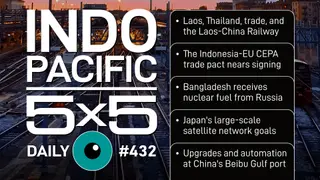
Laos and Thailand are targeting $11 billion in bilateral trade by 2027, leveraging growing connectivity through the Laos-China Railway and ongoing construction of the Thailand-China high-speed rail project to strengthen regional trade corridors. Indonesia and the European Union are moving toward finalizing a comprehensive economic partnership agreement, while Japan pursues ambitious satellite constellation development and Bangladesh engages with Russian nuclear fuel suppliers. China continues port infrastructure upgrades in the Beibu Gulf as part of broader regional economic integration efforts.
The Asia-Pacific region is witnessing accelerated economic integration through simultaneous infrastructure and trade initiatives. The Thanaleng Dry Port in Vientiane serves as a critical junction where different railway gauges converge, facilitating cargo movement across three nations. Container volumes through this facility have surged dramatically in recent years, reflecting growing demand for efficient overland trade routes that bypass maritime congestion. Meanwhile, major economies are pursuing complementary agreements—Indonesia's prospective EU partnership and Bangladesh's nuclear energy development—that extend connectivity beyond traditional logistics networks into energy and technology sectors.
These developments could reshape regional supply chains and investment patterns by reducing shipping times and costs for goods moving between Asia and Europe. Infrastructure improvements may benefit smaller economies like Laos by positioning them as transit hubs. However, the initiatives' success depends on sustained construction timelines and regulatory harmonization. The diversification into nuclear energy and satellite technology alongside trade expansion suggests countries are building comprehensive economic interdependence rather than relying solely on trade corridors.