Blocking Molecular Pathway Could Prevent Immune Cell Exhaustion in Cancer Treatment
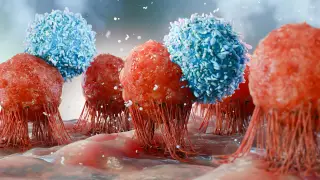
Researchers at Memorial Sloan Kettering Cancer Center identified MEK, a signaling molecule that drives immune cell exhaustion during cancer immunotherapy. When MEK was blocked in animal and laboratory studies, T cells conserved energy, survived longer, and remained active against tumors in hostile microenvironments. Since FDA-approved MEK inhibitors already exist, this approach could potentially be tested in human cancer patients without significant delays.
T cell exhaustion occurs when immune cells continuously battle cancer antigens and become metabolically overwhelmed. The mitochondria within these cells struggle to meet the enormous energy demands required for producing cancer-fighting proteins. Dr. Vardhana's team discovered that MEK, a signaling molecule, accelerates this depletion by driving cells toward terminal exhaustion—a state so severe that immunotherapy cannot restore their function.
Counterintuitively, exhausted T cells maintain high metabolic activity rather than becoming sluggish. When MEK inhibitors were applied in laboratory and animal experiments, T cells achieved better efficiency: they multiplied more effectively while expending less energy. This discovery suggests the cells were previously squandering resources on excessive protein production, a pattern MEK inhibition could correct.
This research could potentially extend immunotherapy benefits for cancer patients whose treatments plateau or fail after initial success. Since existing FDA-approved MEK inhibitors are available, clinical trials in humans may advance relatively quickly, possibly offering new treatment options within several years. However, the approach remains unproven in human patients, and questions about long-term efficacy, side effects, and applicability across cancer types require further investigation before widespread implementation.