Major Battery Storage and Renewable Energy Projects Advance Across India
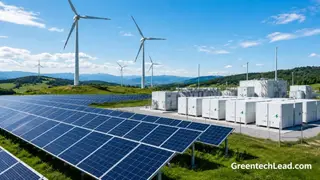
Jupiter Wagons has secured two battery energy storage projects totaling 91 MW of capacity in Uttarakhand and West Bengal, while UltraTech Cement commissioned 116.55 MW of wind power in Rajasthan, bringing its total green capacity above 2 GW. ACME Solar has added 66.68 MW of solar capacity to its 300 MW hybrid project in Rajasthan, with the latest phase beginning commercial operations in October 2026.
India's renewable energy sector is experiencing accelerated growth across multiple technology domains. Battery storage capacity is expanding significantly, with Jupiter Wagons' newly awarded projects in eastern and northern India representing part of a broader push to integrate storage with grid infrastructure. These developments follow major industrial commitments to renewable generation, as demonstrated by UltraTech Cement's achievement of over 2 GW in green capacity through wind, solar, and waste-heat recovery systems across manufacturing operations.
Large-scale hybrid projects are becoming increasingly central to India's renewable transition. ACME Solar's phased expansion of its 300 MW Rajasthan facility illustrates how developers are staging capacity additions to match power purchase agreements and grid absorption capabilities. The combination of generation and storage projects suggests a coordinated approach to addressing intermittency challenges that have historically limited renewable energy adoption in industrial applications.
These projects could affect energy costs for industrial users by securing long-term renewable supply at competitive rates, potentially reducing exposure to fossil fuel price volatility. Grid operators may benefit from improved stability as storage capacity enables better management of renewable generation variability. Manufacturing companies could gain competitive advantages through lower electricity costs and improved sustainability credentials. However, the projects' overall impact on energy affordability and broader decarbonization targets would depend on comparable developments across other states and sectors.