International Investment and New Contracts Drive Renewable Energy Expansion
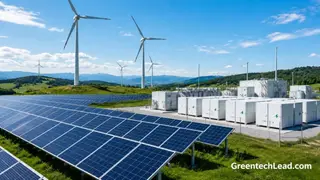
Sumitomo Corporation acquired a 49 percent stake in Hero Future Energies' 500 MW wind-solar hybrid project with 200 MWh battery storage in Karnataka, scheduled to begin operations in March 2027. Bondada Engineering's Onix subsidiary secured ₹911 crore in financing for a 225 MW solar project in Maharashtra, while Serentica Renewables signed an 80 MW wind-solar deal with Vardhman Textiles to provide round-the-clock renewable energy.
Three separate renewable energy ventures announced in India demonstrate growing momentum in hybrid generation systems and corporate power procurement. The projects span different business models: a utility-scale hybrid facility combining wind, solar, and battery storage; a state-backed agricultural solar program with institutional financing; and a corporate power agreement where a textile manufacturer takes equity stakes in a mixed-resource generator. Together, these deals represent approximately 805 MW of new capacity across multiple Indian states, with combined investment exceeding ₹900 crore in secured financing alone.
The arrangements highlight how energy projects increasingly incorporate storage and geographic diversification to optimize output patterns. Battery technology enables hybrid facilities to smooth variable generation across time periods, while multi-state wind and solar combinations leverage regional weather patterns. Long-term power purchase agreements—ranging from 25 years for utility contracts to corporate commitments—provide revenue certainty for project development and debt repayment.
These investments could reshape industrial energy procurement in India by establishing templates for large manufacturers to access renewable power at scale while reducing operational carbon footprint. Participating companies may achieve cost stability through fixed-price long-term agreements while supporting India's renewable capacity expansion. Financial institutions backing these projects signal confidence in hybrid technology viability. However, actual impact on grid reliability, employment, and emissions reduction will depend on project execution timelines and whether similar models scale across additional sectors and regions.