October Skywatching Guide: Saturn at Opposition, Orionid Meteors, and Lunar Encounters
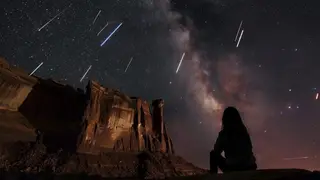
October 2026 offers several significant astronomical events for observers, beginning with Saturn reaching opposition on October 4th when it will be visible throughout much of the night. The Orionid meteor shower, produced by debris from Halley's Comet, will peak on October 21-22, while the Moon will pass close to the Pleiades star cluster on October 27-28. Additionally, NASA's Hubble Space Telescope has recently discovered a ten-sided atmospheric wave around Saturn's south pole, providing scientists with an unusual opportunity to study a massive developing atmospheric feature.
October 2026 presents exceptional viewing conditions for amateur astronomers and casual stargazers alike. Saturn's opposition makes the planet ideally positioned for observation, appearing high in the sky throughout the night rather than only briefly visible near the horizon. This alignment occurs because Earth's orbital position places it directly between our star and the ringed gas giant, a geometric arrangement that happens only once annually for each planet in our solar system.
The month also showcases celestial phenomena connected to larger cosmic cycles. The Orionid meteors originate from material shed by Halley's Comet during its periodic visits to the inner solar system, while the Pleiades star cluster represents one of humanity's oldest astronomical reference points, documented in cultures spanning from ancient Greece to Polynesia. Meanwhile, Hubble's detection of Saturn's ten-sided polar wave adds a scientific dimension to October's skywatching opportunities, allowing researchers to study atmospheric dynamics in real time.
This skywatching guide may increase public engagement with astronomy and space science by providing accessible entry points for observation. Heightened interest in planetary phenomena and meteor showers could boost participation in citizen science initiatives and strengthen public appreciation for space-based research. Educational institutions might leverage these events to teach physics and celestial mechanics. Additionally, broader enthusiasm for astronomy could indirectly support funding and policy discussions surrounding space exploration and scientific research infrastructure.