Tibetan Plateau Ice Core Preserves Climate Record Stretching Over 128,000 Years
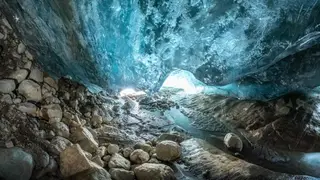
Researchers analyzing ice cores from Tibet's Guliya Plateau have identified ice layers that may exceed 128,000 years in age, making them among the oldest mountain glacier ice recovered outside polar regions. The discovery extends the climate record far deeper into the last glacial period than previously confirmed for the region, providing crucial evidence that ice sheets persisted through the early Holocene. Two ice cores collected 23 years apart showed consistent patterns in their oxygen isotope signatures, confirming the reliability of these ancient climate records.
The Guliya ice cap's preservation spans multiple glacial cycles, offering scientists an unprecedented window into atmospheric and environmental shifts across more than a century of millennia. By analyzing chemical signatures—particularly oxygen isotope ratios and radioactive decay markers—researchers can reconstruct past temperatures, precipitation patterns, and atmospheric composition. The comparison of samples collected 23 years apart strengthens confidence in these measurements, demonstrating that the climate signals captured in the ice layers reflect genuine historical conditions rather than localized anomalies or contamination from the drilling process itself.
Mountain glaciers outside polar regions rarely maintain ice records extending beyond 50,000 years, making the Guliya discovery exceptionally valuable. The identification of the Laschamp Geomagnetic Excursion—a well-documented magnetic field disruption from over 41,000 years ago—provides an independent chronological anchor. Combined with cave deposit data from the surrounding plateau, this evidence establishes a timeline reaching back to the Penultimate Glacial Period, substantially expanding the geographic scope of deep climate archives.
Climate scientists and policymakers could benefit from extended historical climate records when modeling long-term environmental trends and assessing natural variability. The data may refine predictions about mountain glacier behavior in response to temperature changes, relevant for water resources across Asia. Additionally, deeper understanding of past glacial persistence informs assessments of current ice sheet stability. However, the findings primarily advance scientific knowledge; broader societal impact depends on how these insights are integrated into climate policy and water management planning in affected regions.