New Ancient Bovine Species Identified Through Siberian Cave Genetics
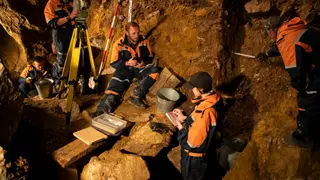
Researchers analyzing hundreds of tiny bone fragments from Denisova cave in Siberia have identified a previously unknown species of yak that lived alongside Neanderthals, Denisovans, and early humans. Genetic analysis of remains from 20 individuals shows the species diverged from wild yaks approximately 400,000 years ago and went extinct around 30,000 years ago. The discovery demonstrates how ancient DNA analysis can reveal megafaunal species that were previously unknown to science.
Denisova cave in the Altai mountain foothills has long served as a crucial window into prehistoric life, having yielded the first fossil evidence of the enigmatic Denisovan lineage. The research team initially sought to study bovine evolution by examining bone fragments from the site, but instead uncovered genetic material from an entirely unknown species.
The newly identified yak diverged from its wild relatives roughly 400,000 years ago, a temporal separation comparable to the evolutionary distance between modern polar and brown bears. Geographic distribution of remains suggests this species occupied lower elevations than contemporary wild yaks, indicating potential adaptations to different environmental conditions than their high-altitude modern counterparts.
This discovery could enhance scientific understanding of how ancient DNA analysis reveals extinct species previously overlooked by paleontology. The finding may influence how researchers examine existing bone collections from archaeological sites, potentially leading to reclassification of previously catalogued specimens. The work demonstrates paleogenomics' capacity to distinguish between species when physical characteristics alone prove ambiguous, which could refine future interpretations of megafaunal diversity during the late Pleistocene.